

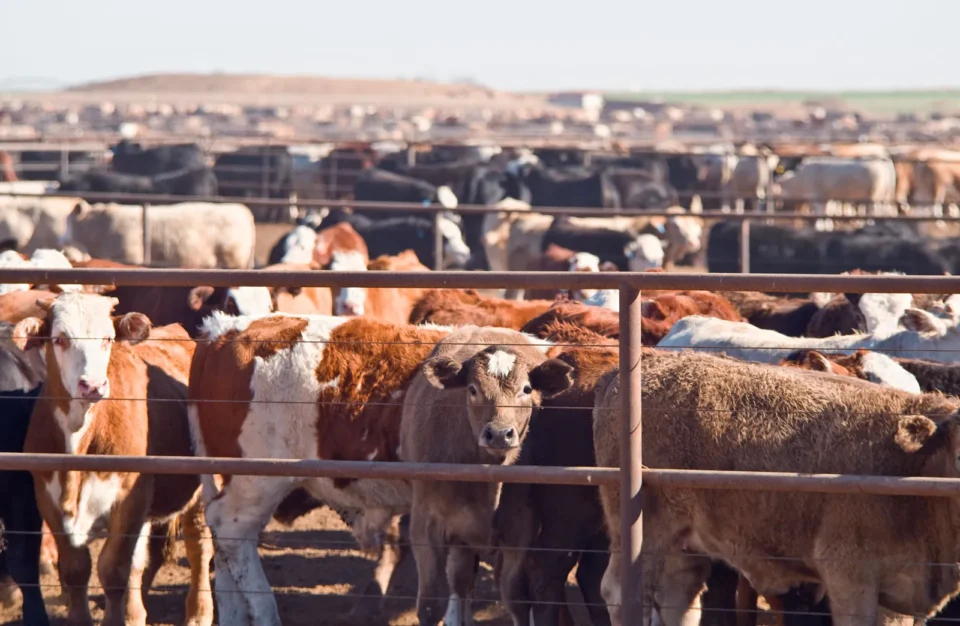
A growing coalition of more than 30 civil society organizations is calling on the World Bank Group to end its financial support for industrial livestock production and redirect funding toward sustainable, small-scale food systems. The group argues that public investment should prioritize food systems that protect people, animals, and the environment rather than expanding factory-style farming operations.
The call is part of a coordinated global campaign across 25 countries, launched alongside the World Bank and International Finance Corporation (IFC) Spring Meetings. Activists are using the platform to highlight concerns over continued public funding for large-scale industrial livestock systems, which they link to climate change, biodiversity loss, public health risks, and rising food insecurity.
Between 2023 and 2024 alone, the World Bank Group reportedly invested around $1.4 billion in industrial livestock production. Its private sector arm, the International Finance Corporation, approved 38 livestock-related investments worth nearly $2 billion between 2020 and 2025. A 2023 analysis by the Stop Financing Factory Farming Campaign further revealed that Sub-Saharan Africa received a significant share of these funds, with over $1.3 billion directed toward industrial animal agriculture projects across developing regions.
Critics argue that these investments risk reshaping African food systems in ways that undermine smallholder farmers, who currently produce the majority of the continent’s food. They warn that industrial livestock systems tend to concentrate profits, increase environmental degradation, and heighten exposure to pollution and disease, while doing little to strengthen long-term food security.
Despite these concerns, the World Bank Group has indicated plans to expand its agribusiness portfolio to $9 billion annually by 2030. At the same time, the IFC is reviewing its environmental and social standards, a process that many stakeholders see as a critical opportunity to align global financing with climate and sustainability goals.
Organizations such as World Animal Protection argue that continued investment in factory farming could weaken Africa’s traditional food systems, which rely heavily on smallholder and community-based agriculture. They emphasize that these systems are more resilient, environmentally sustainable, and better suited to supporting rural livelihoods.
According to Sally Kahiu, public finance should be directed toward strengthening sustainable food systems rather than expanding industrial livestock operations. She stressed that investments should support ecosystems, rural communities, and long-term food security rather than models that may increase inequality and environmental harm.
Similarly, Opeyemi Elujulo of the Youth in Agroecology and Restoration Network (YARN) argues that agroecological and community-led food systems remain significantly underfunded despite their proven benefits. These systems, he noted, can improve biodiversity, strengthen local economies, and build climate resilience. Redirecting financial flows toward such approaches, he said, is both a moral and strategic necessity.
As global debates around food systems intensify, campaigners are urging international financial institutions to adopt clearer, more transparent policies that phase out support for industrial livestock production and prioritize sustainable, locally driven agricultural development.