

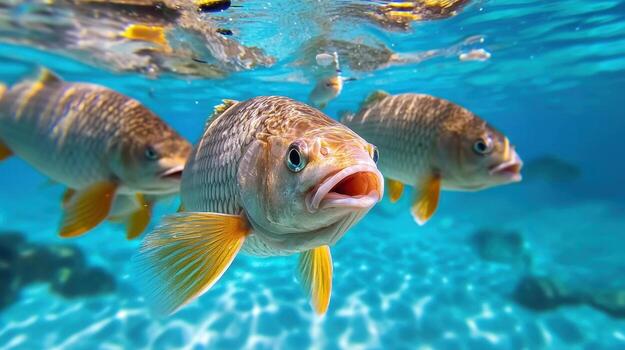
Marine heatwaves are driving fish populations to decline and migrate at rates up to four times faster than the impacts associated with long-term ocean warming, according to new scientific findings that are raising serious concerns for global fisheries, marine ecosystems, and food security.
The warning appears in the latest joint report by the Food and Agriculture Organization of the United Nations and the World Meteorological Organization titled Extreme Heat and Agriculture, which highlights the growing threat posed by extreme ocean temperature events.
Marine heatwaves are prolonged periods of abnormally high ocean temperatures that can persist for weeks, months, or even years. Scientists say these events are becoming increasingly frequent and intense as climate change continues to warm the world’s oceans.
Researchers studying fisheries in the northeast Pacific found that marine heatwaves can trigger rapid declines in fish biomass and major shifts in species distribution far more quickly than gradual ocean warming trends projected over decades.
According to the report, fish populations exposed to marine heatwaves experienced changes in biomass and geographic distribution “at least four times faster and larger in magnitude” than the impacts linked to long-term climate warming alone.
The findings suggest that many current fisheries models may underestimate the true effects of climate change because they focus primarily on gradual warming while overlooking the growing influence of extreme heat events.
Scientists now warn that marine heatwaves could potentially double climate-related impacts on important commercial fish species by 2050 compared to earlier projections based only on long-term warming patterns.
Additional research published in Nature Ecology & Evolution revealed that long-term ocean warming is already contributing to significant declines in fish populations worldwide. The study analysed more than 702,000 biomass estimates covering nearly 34,000 fish populations between 1993 and 2021.
Researchers found that chronic ocean warming was associated with annual biomass declines of up to 19.8% in some fish populations. Meanwhile, marine heatwaves and unusually warm years caused even sharper biomass losses of up to 43.4% in populations living near the warmer limits of their natural habitats.
Some colder-water regions temporarily recorded increases in fish biomass as species migrated toward cooler environments. In certain cases, biomass growth reached as high as 176%. However, scientists caution that these short-term gains could create misleading impressions of recovery and potentially contribute to overfishing if not carefully managed.
Marine heatwaves are also rapidly reshaping marine ecosystems by forcing fish species to migrate toward the poles or deeper waters in search of cooler temperatures. According to NOAA Fisheries, these extreme warming events can alter ocean temperatures across hundreds of kilometres within months, disrupting habitats, food chains, and breeding patterns.
Environmental experts say the growing frequency of marine heatwaves poses serious long-term risks to biodiversity, coastal economies, and global seafood supplies. The International Union for Conservation of Nature estimates that marine heatwaves have increased by approximately 50% over the past decade and could become up to 50 times more frequent by the end of the century if greenhouse gas emissions continue rising.
Scientists are now calling for climate-smart fisheries management strategies that account for both long-term ocean warming and short-term extreme heat events to better protect vulnerable fish stocks, support sustainable seafood production, and preserve marine ecosystems for future generations.