

As farmers across South Africa prepare for the 2026 season, the agricultural sector faces a complex mix of challenges and opportunities. As a key contributor to the country’s economy and food security, agriculture must navigate mounting pressures — from climate variability and resource constraints to financial volatility and intensifying global competition. Producers are increasingly required to deliver higher yields with fewer resources, protect crops against pests and diseases, and maintain competitiveness in demanding export markets.
Climate change remains one of the most significant risks to agricultural productivity. Prolonged droughts, erratic rainfall patterns and rising temperatures continue to disrupt planting cycles and reduce yields. Soil degradation, nutrient depletion and erosion further complicate farming operations, while evolving pest, disease and weed resistance threatens crop performance and increases the potential for losses.
Financial strain adds to the burden. Escalating input costs for seeds, fertilisers and crop protection products are narrowing profit margins. At the same time, limited access to affordable credit restricts farmers’ ability to invest in advanced technologies. Ongoing market volatility makes yield stability and cost efficiency more essential than ever for long-term sustainability.
For Corteva Agriscience, these pressures underscore the importance of continuous innovation and practical, science-based solutions tailored to local conditions. The company views 2026 as an opportunity to deepen its commitment to supporting South African farmers through sustainable practices and technologies designed to enhance both productivity and profitability.
A central component of Corteva’s strategy is the development of climate-resilient seeds through precision breeding and locally driven research. By investing in hybrids adapted to withstand drought, heat stress and other environmental challenges, the company aims to equip farmers with varieties capable of delivering consistent yields under increasingly unpredictable conditions.
Seed treatments and crop protection solutions also form a critical part of this approach. At its Centre for Seed Applied Technologies in Rosslyn, Corteva develops and tests biological and chemical seed treatments designed to protect crops from the earliest stages of growth. When combined with integrated insecticides, fungicides, herbicides and nitrogen stabilisers, these solutions help farmers optimise input use, reduce crop losses and minimise environmental impact — directly supporting improved profitability.
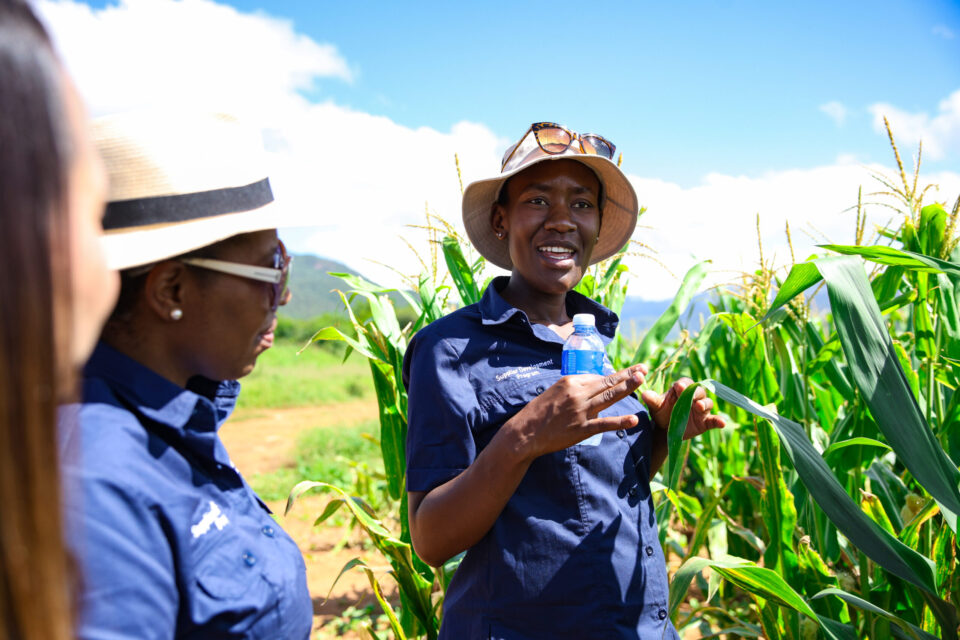
Beyond products, Corteva places strong emphasis on farmer empowerment. Through training initiatives and programmes such as SoilSistas, which promotes women-led farming enterprises, the company supports skills development, business management capabilities and inclusive participation in the agricultural economy.
Digital agriculture is another pillar of support. Data-driven decision-making tools, crop modelling and precision guidance technologies enable farmers to monitor performance, manage risk and use inputs more efficiently. This integration of digital innovation helps ensure that South African producers can meet increasingly stringent global standards for quality, traceability and sustainability.
By addressing agronomic, financial and environmental challenges holistically, Corteva aims to help South African farmers strengthen their competitiveness on the international stage. Access to high-quality seed genetics, effective crop protection and sustainable farming practices supports consistent production and opens pathways to premium export markets. Collaboration with research institutions, universities and government stakeholders further reinforces the agricultural ecosystem and ensures innovation remains accessible and relevant.
Looking ahead, the resilience of South African agriculture will depend on sustained investment, collaboration and the adoption of advanced technologies. Through innovation, sustainability and inclusive growth, the sector has the potential to remain a cornerstone of the national economy and a reliable source of food security for generations to come.