

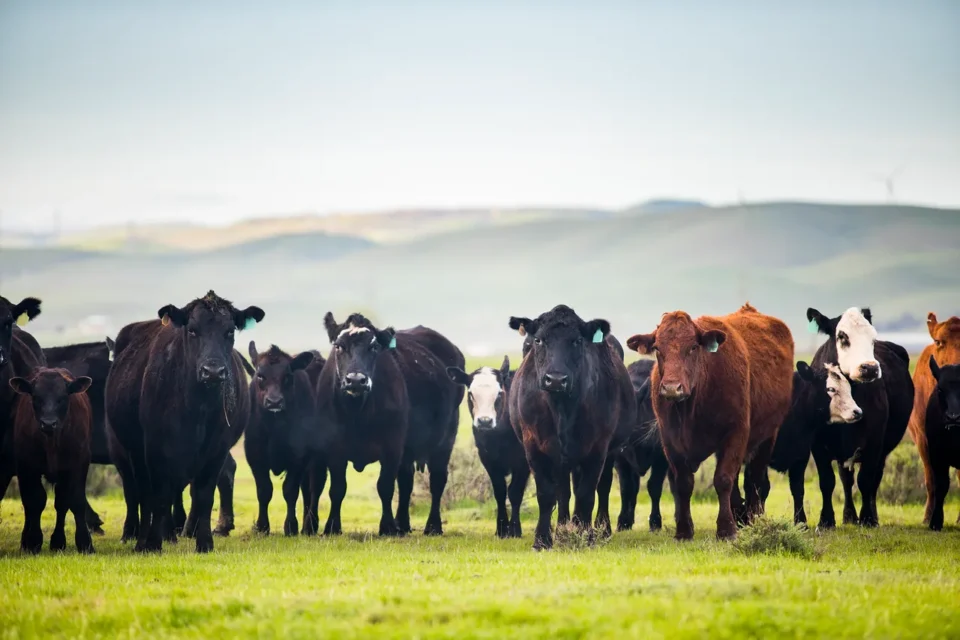
Southern Africa’s beef industry is entering a critical period as new export opportunities emerge in the United States and China, while Botswana continues to deal with the loss of access to key European markets following foot-and-mouth disease outbreaks.
For cattle producers and meat processors across the region, the developments highlight both the potential of market diversification and the importance of maintaining strict animal-health and export standards.
A 90-day opportunity in the US market
A temporary 90-day tariff arrangement in the United States has opened an opportunity for international suppliers of ground beef, potentially creating additional export prospects for producers in Namibia, Botswana and South Africa.
The measure allows up to 300,000 metric tonnes of ground beef to enter the US without the usual out-of-quota tariff. It follows an earlier decision to increase Argentina’s tariff-free quota for lean beef trimmings by 80,000 tonnes a year.
For Southern African exporters, the opportunity comes at a time when access to international markets is becoming increasingly important as producers seek alternatives to traditional destinations.
Namibia enters the period with a particularly broad export footprint. The country has access to beef markets in the United States, China, Norway and the European Union.
According to Namibia’s agriculture minister, the country generated more than N$2.1 billion, or approximately US$130 million, in foreign exchange from beef exports during 2025.
Namibia’s state-owned meat processor Meatco has also secured additional Norwegian export quota through a trade arrangement with Botswana under the SACU-EFTA framework. Meatco had reportedly used its own 2026 Norwegian allocation by June.
The development reflects the value of maintaining multiple export destinations rather than relying heavily on a single market.
Botswana faces a major market setback
Botswana’s beef industry is confronting a very different situation.
On 21 April 2026, the European Union suspended Botswana’s remaining authorised fresh-beef export zones following outbreaks of foot-and-mouth disease in the country’s veterinary control areas.
The decision has significant implications for Botswana, where cattle production and beef exports play an important role in rural livelihoods and the national economy.
The loss of EU access has also reinforced the need for Botswana to diversify its export markets.
China has emerged as one of the country’s key alternatives. Botswana signed a beef export protocol with China in 2025 following Beijing’s zero-tariff policy for 53 African countries.
The country has since secured a P1 billion, or approximately US$73 million, investment commitment from China’s Beijing AgriFam Co. Ltd. The investment is aimed at developing feedlot infrastructure capable of meeting Chinese quality and volume requirements.
The planned development is expected to support Botswana’s ambition to expand direct exports to China. The country currently produces approximately 24,000 tonnes of beef annually through the Botswana Meat Commission, with around 9,000 tonnes historically destined for the EU.
With that market disrupted, finding alternative destinations for production has become increasingly important.
Namibia opens another route for Botswana beef
Botswana is also looking closer to home for new opportunities.
A newly signed transit agreement between Botswana and Namibia will allow beef from Botswana’s Ngamiland region to pass through Namibia on its way to Angola.
The agreement, announced by Botswana’s Minister of Lands and Agriculture, Dr Edwin Dikoloti, could provide farmers in Ngamiland with an additional route to an export market.
It is also expected to support the operations of the Botswana Meat Commission’s Maun abattoir, which has been affected by the disruption to Botswana’s traditional export channels.
For farmers in the region, the agreement could provide an important alternative outlet at a time when disease-related restrictions have placed pressure on the cattle value chain.
The infrastructure gap remains
The search for new markets, however, does not address all of the challenges facing Africa’s livestock sector.
Across the continent, limited cold-chain infrastructure, transport constraints and inadequate processing capacity continue to restrict the movement from live-animal and commodity exports towards higher-value processed meat products.
This is particularly relevant as African producers seek to capture more value from growing demand in markets across the Middle East, Asia and Europe.
Namibia, Botswana and South Africa remain among Africa’s important meat exporters, but the continent as a whole continues to import significant volumes of meat from major global suppliers.
Improving processing, logistics, animal-health systems and market infrastructure will therefore be critical if African producers are to compete more effectively in international markets.
South Africa returns to China
South Africa also has an opportunity to expand its presence in Asian markets.
The country resumed beef exports to China in 2025 after years of restricted access, reopening an important destination for South African beef producers and processors.
The renewed access also raises the prospect of greater regional cooperation.
Rather than Southern African producers competing independently for market share, there is scope for countries such as South Africa, Namibia and Botswana to explore complementary production, processing and logistics capabilities.
A more coordinated regional approach could strengthen the region’s ability to supply major markets and compete with established exporters such as Brazil and Australia.
Biosecurity could determine the next winners
The current developments underline a fundamental reality for Southern Africa’s beef industry: access to international markets depends on more than having cattle and production capacity.
Animal health, traceability, veterinary controls and compliance with importing-country standards can determine whether a market remains open or closes almost overnight.
For Botswana, the disruption to EU exports demonstrates the economic consequences of disease outbreaks. For Namibia and South Africa, maintaining strong biosecurity and export compliance will be equally important as they pursue opportunities in the US, China and other markets.
The coming months will therefore be an important test for the region’s beef industry.
New opportunities are emerging in the US, China and neighbouring African markets, but converting those opportunities into sustained export growth will depend on the industry’s ability to maintain animal-health standards, strengthen processing and logistics infrastructure, and build a more diversified regional trade network.
For Southern Africa’s cattle farmers, the message is clear: market access is an asset, but biosecurity is what keeps the market open.