

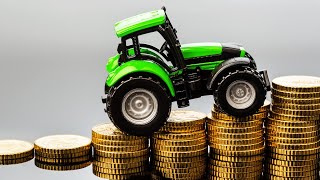
For farmers across Sub-Saharan Africa, one of the most important decisions is what to plant. Increasingly, this is no longer just about food crops versus cash crops, but about choosing between traditional farming systems and longer-term investments such as tree-based “paper crops” like eucalyptus.
With climate variability intensifying and global markets becoming more unpredictable, the financial sustainability of conventional agriculture is under pressure. At the same time, rising demand for sustainably sourced wood products is opening new opportunities for agroforestry across the region.
The volatility of traditional farming
Many smallholder farmers in Sub-Saharan Africa depend on monoculture crops such as maize, wheat or pulses. While these crops remain essential for food security, they expose farmers to significant risks.
Commodity prices fluctuate due to global factors beyond farmers’ control, making income unpredictable. Climate shocks further worsen the situation. Drought events, such as those linked to El Niño in Southern Africa, have previously caused major declines in crop yields, directly affecting farm income and rural livelihoods.
This combination of market and climate risk makes long-term planning difficult for farming households, often impacting education, healthcare and investment decisions.
The hidden costs of crop production
Profitability in traditional farming is often reduced by rising input and operational costs.
Water is one of the biggest challenges. In many parts of Sub-Saharan Africa, water-intensive crops are becoming increasingly difficult to sustain. Farmers face higher irrigation costs, deeper boreholes and increased energy use for pumping water.
Fuel and logistics also add to the burden. From machinery operation to transport and storage, fuel-related expenses can significantly reduce margins, especially in remote farming areas.
Agroforestry as a long-term investment
Agroforestry—particularly eucalyptus cultivation—is gaining attention as an alternative or complementary farming model. Instead of focusing on annual harvests, farmers develop long-term biological assets that can generate stable returns.
Global demand for wood products continues to rise, driven by deforestation concerns and stricter sustainability requirements. This creates a growing market for responsibly managed timber from regions like Sub-Saharan Africa.
Why eucalyptus is gaining traction
Eucalyptus offers several advantages for African farmers:
- Fast growth, with some species ready for harvest within 4–5 years
- Ability to grow on marginal or less productive land
- Lower labour and input requirements compared to many crops
- Natural resilience to drought conditions
However, success depends on selecting the right species for local conditions, especially regarding water availability.
Evidence of stronger returns
Studies comparing traditional farming with agroforestry show clear financial benefits. In one long-term analysis, agroforestry systems delivered higher net returns and better benefit-cost ratios over a 10-year period.
Real-world examples support this. In parts of East Africa, eucalyptus production has become a major income source for smallholder farmers, contributing significantly to household earnings.
Building resilience through diversification
Tree crops are not a replacement for food production, but they offer an important opportunity for diversification. By combining traditional crops with agroforestry, farmers can reduce exposure to climate shocks and price volatility while improving long-term income stability.
As demand for sustainable wood products grows, Sub-Saharan African farmers who invest in paper crops today may be better positioned to benefit from future market opportunities.
Conclusion
Agriculture in Sub-Saharan Africa is at a turning point. While traditional farming remains vital, integrating alternative income streams such as eucalyptus agroforestry can strengthen resilience, improve profitability and support long-term sustainability.
For many farmers, the future may not be about choosing one system over another, but about building a balanced and diversified agricultural portfolio.