

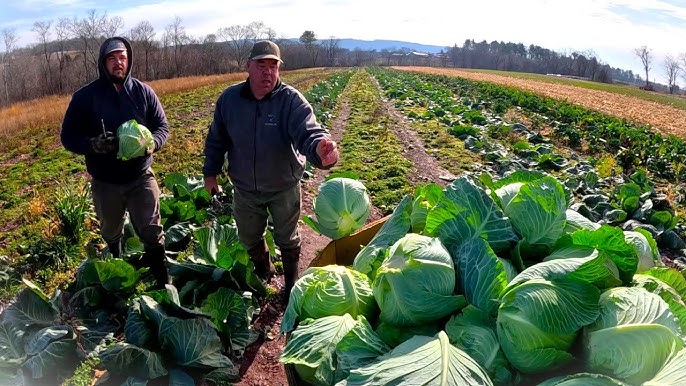
Roadway Farms, located in Albert Falls near Pietermaritzburg, KwaZulu-Natal, is implementing a model designed to keep the family farm financially viable and sustainable for the long term. Under the leadership of Shakti Satyapal, the farm has evolved from a struggling operation into a progressive enterprise focused on regenerative agriculture, producing cabbage, spinach, and a variety of seasonal vegetables throughout the year.
Satyapal, who transitioned from a corporate career in advertising and strategic marketing to full-time farming, has spent the past five years reimagining the family farm. Working alongside his father, Prakash, and sister, Prishani, he has focused on transforming the business while maintaining the farm’s legacy. “It has been an opportunity to build on what my father developed over many years and create a blueprint for other farmers to transition to regenerative agriculture,” says Satyapal.
Weathering the Perfect Storm
The 26-hectare farm has faced numerous challenges in recent years. When Satyapal took over, infrastructure was inadequate, tractors were in disrepair, irrigation systems were outdated, and global events compounded local issues. The COVID-19 pandemic, civil unrest in 2021, the Russia-Ukraine conflict impacting fertiliser availability, and annual flooding in KwaZulu-Natal all created a “perfect storm” of difficulties for the farm.
To address these challenges, the family initially scaled back production to focus on upgrading infrastructure. Personal investment, coupled with government support through the Comprehensive Agricultural Support Programme, enabled them to repair tractors, recondition implements, and improve irrigation systems. With the basics restored, the farm became more efficient, and Satyapal found his passion for understanding the processes behind food production.
A Passion for Food and Soil
Satyapal emphasizes that food production is intimately connected to nature and the health of the soil. The farm is transitioning from synthetic fertilisers to locally sourced organic options, with plans to eventually produce their own fertiliser on-site. This approach focuses on preserving and regenerating the soil while maintaining high-quality, nutrient-rich produce.
“Many conventional agriculture practices are damaging the most important resource — the soil,” he says. “Our system focuses on taking from the soil and putting back, building it up over time. Regenerating ecosystems is a crucial part of the bigger picture.”
Production Practices and Crop Management
Roadway Farms produces spinach and cabbage year-round, alongside a variety of summer and winter crops. Winter crops include broccoli, cauliflower, lettuce, leeks, spring onions, and herbs, while summer production features okra, chillies, green beans, dry beans, butternut, brinjals, and other seasonal vegetables. Roughly half of production occurs on family-owned land, with the remainder on leased plots. Crop rotation and cover cropping are practiced to rehabilitate the soil and reduce chemical inputs.
Mechanisation is used alongside manual labour, depending on the crop. Investments in a new tractor, seedling transplanter, and bedformer have improved efficiency and protection against flooding. Irrigation is provided via an overhead sprinkler system drawing water from the Umgeni River. A recently constructed packhouse adds value to produce, mitigates risk, and allows the farm to purchase vegetables from other growers to maintain supply.
Market Realities
Despite producing high-quality vegetables, the farm is not immune to market pressures. Oversupply and fluctuating prices can force the sale of produce below cost, as Satyapal notes with cabbages, which sometimes sell for less than production costs. To better navigate market risks, Satyapal and his sister continue consulting on sustainability projects and champion initiatives like data digitisation to improve planning and prevent oversupply.
By tracking fertiliser use, diesel consumption, and hectares under cultivation, farmers could make informed decisions on crop choices and timing, reducing the likelihood of market crashes. While it will take time to accumulate sufficient data, Satyapal believes such tools are critical for helping farmers run more efficient and profitable businesses.
A Sustainable Vision
Roadway Farms demonstrates that combining regenerative practices, infrastructure investment, mechanisation, and data-driven decision-making can create a resilient, sustainable farming operation. The Satyapal family’s journey shows that even in the face of climatic, economic, and market challenges, it is possible to grow high-quality food while preserving natural resources and preparing for a sustainable future.