

Feed producers across Africa are navigating an increasingly challenging operating environment, shaped by rising input costs, supply chain disruptions, and persistent animal health risks. Among the most pressing concerns is the continued spread of Foot-and-Mouth Disease, which is disrupting livestock markets and altering demand patterns across the continent.
These overlapping pressures are forcing producers to rethink their strategies, placing greater emphasis on cost control, efficiency, and operational flexibility. According to insights from Bühler Group Southern Africa, the focus has shifted from expansion to stabilising operations and improving resilience in a volatile market.
To remain competitive, feed producers are prioritising efficiency and adaptability. This includes ensuring that production systems can respond quickly to changes in demand across different livestock sectors, while maintaining consistent feed quality and safety. Achieving this requires reliable, repeatable processes that minimise variability and support continuity, even under uncertain conditions.
The most immediate opportunities for efficiency gains lie in core production stages such as grinding, mixing, conditioning, and pelleting. These processes account for a large share of energy consumption and overall production costs. Improvements in particle size distribution, steam conditioning, and pellet durability can significantly reduce waste and increase output, delivering measurable cost savings.
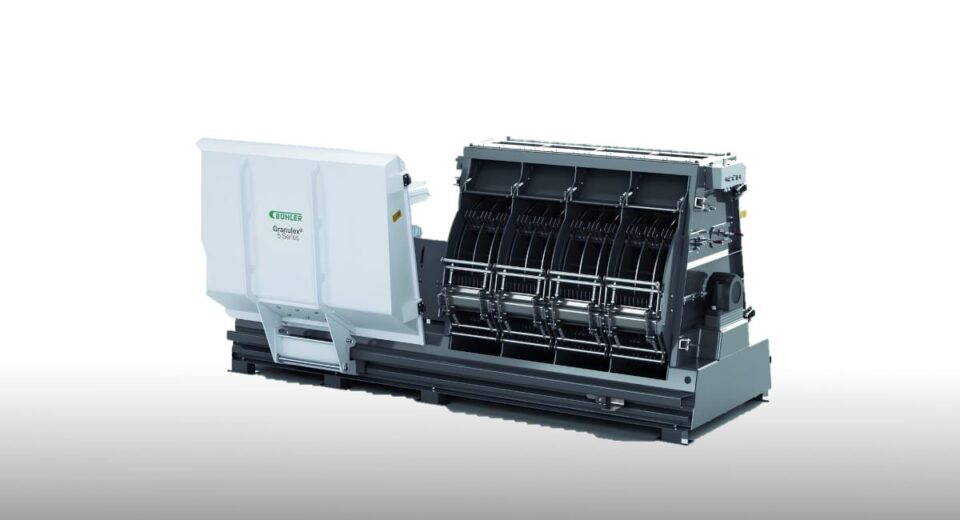
Advanced technologies are playing a key role in this transition. High-performance equipment such as the KUBEX pellet mill, combined with conditioning systems like Hysis and efficient grinding solutions, enable higher throughput while lowering energy consumption. These innovations allow producers to optimise production without compromising quality.
Managing raw material variability remains another major challenge. Fluctuations in the availability and quality of inputs such as maize and soy are common across African markets, particularly as producers shift towards locally sourced materials to reduce import costs. While this approach offers financial benefits, it also introduces inconsistencies in feed composition.
Maintaining consistent nutritional quality under these conditions depends on precise process control. Effective conditioning and uniform treatment of raw materials are essential to ensure digestibility, homogeneity, and feed safety. Advanced conditioning systems help standardise inputs, allowing producers to maintain quality even when raw materials vary.
Energy instability is also a critical constraint, particularly in regions affected by unreliable power supply. Feed mills are increasingly adopting energy-efficient equipment, automation, and systems designed for rapid restart after power interruptions. These measures help maintain stable production and reduce downtime, even in challenging operating environments.
Digitalisation is emerging as a key enabler of long-term resilience. By improving visibility into production processes and enabling real-time monitoring of key performance indicators, digital tools allow producers to make faster, data-driven decisions. Incremental adoption of automation and digital solutions can significantly improve efficiency, reduce human error, and enhance overall plant performance.
Looking ahead, the ability to produce more feed with fewer resources will be essential for the future of Africa’s livestock sector. Efficient and scalable feed production systems are not only critical for business sustainability but also play a vital role in strengthening food security across the continent.
Through a combination of advanced technologies, process optimisation, and digital innovation, Bühler Group is supporting feed producers in improving efficiency, reducing costs, and building more resilient operations. As pressures on the industry continue to grow, these solutions will be key to ensuring consistent production and long-term sector growth.