

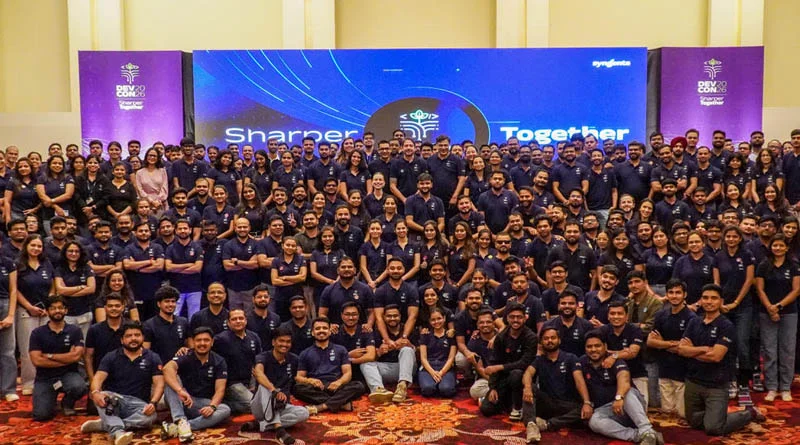
Syngenta is exploring how artificial intelligence, engineering and digital technologies can help shape the next generation of agricultural solutions, with more than 500 technology and agriculture experts gathering in Pune, India, for DevCon 2026.
Held on September 2–3 under the theme “Sharper Together,” the annual event brought together developers, data scientists, engineers, agronomists, product specialists and digital experts from across Syngenta’s global operations.
The event focused on how artificial intelligence and advanced digital technologies can support better decision-making, improve productivity and contribute to more sustainable agriculture.
Syngenta Group Global CEO Hengde Qin and Chief Information Digital Officer Feroz Sheikh opened the event virtually, highlighting the growing importance of digital technologies across the company. They also discussed the role of AI and agentic development in helping Syngenta accelerate innovation, improve operations and create greater value for farmers and agricultural stakeholders.
Andre Piza, Global Head of Digital AgTech at Syngenta, said technology will play an increasingly important role as agriculture faces more complex challenges.
“DevCon is more than a technology conference. It is a platform where our global engineering community comes together to learn, collaborate and innovate,” Piza said.
He added that combining engineering practices with AI could help create solutions with practical applications for farmers while supporting the long-term development of agriculture.
Pune emerges as a digital agriculture hub
A major focus of DevCon 2026 was Syngenta’s technology operations in Pune, which have become an important centre for the company’s digital agriculture activities.
According to Syngenta, more than 90% of the digital agriculture solutions developed by its Pune technology teams support farmers and agricultural stakeholders across global markets.
The event also brought together approximately 250 developers from across India, providing an opportunity for technical collaboration, knowledge sharing and problem-solving around digital agriculture.
Salil Bongale, Global Head of IT & Digital at Syngenta’s Pune Centre, said the event demonstrated how collaboration among technology professionals can contribute to agricultural innovation globally.
The Pune teams are developing technologies intended to support farmers in different markets, highlighting the increasingly global role of digital engineering in agriculture.
AI and AgTech innovation
DevCon 2026 featured technical demonstrations, peer-learning sessions and discussions focused on AI-enabled development and digital agriculture.
The event highlighted a shift in agricultural technology from conventional software development towards digital tools that can help farmers address challenges related to productivity, resilience and sustainability.
The growing use of AI in agriculture could support applications ranging from data-driven decision-making and farm management to more efficient use of agricultural resources. However, the practical value of these technologies will ultimately depend on how effectively they can be adapted to farmers’ needs and different agricultural environments.
For Africa, where farmers operate across highly diverse production systems and face challenges including climate variability, limited access to information and uneven digital connectivity, the development of practical and accessible digital agricultural tools could be particularly significant.
Technology’s growing role in agriculture
As agriculture faces increasing pressure from climate change, resource constraints and the need to produce more efficiently, the integration of AI, engineering expertise and agronomic knowledge is expected to become increasingly important.
Syngenta’s DevCon 2026 reflects a broader trend in the agricultural sector: technology companies are increasingly combining artificial intelligence, data science and agricultural expertise to develop tools aimed at solving real-world farming challenges.
The event ultimately reinforced Syngenta’s view that the future of AgTech will depend on collaboration, continuous learning, engineering excellence and the ability to scale digital innovation.
For farmers, however, the real measure of these technologies will be their ability to deliver practical, affordable and accessible solutions that improve outcomes on the farm.