

Agricultural biotechnology company Robigo is developing engineered microbial products designed to improve the effectiveness and reliability of biological crop protection.
The Cambridge, Massachusetts-based company recently closed a Series A funding round led by Leaps by Bayer, with participation from Illumina Ventures, SVG Thrive, Congruent Ventures and Endeavor8. The funding will support the development and commercialisation of two microbial biopesticides, while expanding Robigo’s pipeline into additional soil-borne diseases affecting broadacre crops.
At the centre of the company’s approach is its ARGO platform, which uses computational design to engineer microbial traits. Robigo says the technology can reduce the development timeline for new biological products from the industry standard of three to five years to less than 20 months.
Engineering microbes for stronger performance
Biological crop-protection products have attracted growing interest as agriculture looks for alternatives and complements to conventional synthetic chemistries. However, inconsistent field performance has remained one of the challenges limiting adoption.
Robigo’s approach is to engineer microorganisms rather than relying solely on naturally occurring microbial characteristics.
According to founder and CEO Andee Wallace, the company’s technology is intended to improve microbial performance and enable activity against diseases that the microorganisms would not naturally be able to control.
The company’s first two products are now in late-stage development, with applications targeting important soil-borne diseases.
Targeting Sudden Death Syndrome in soybeans
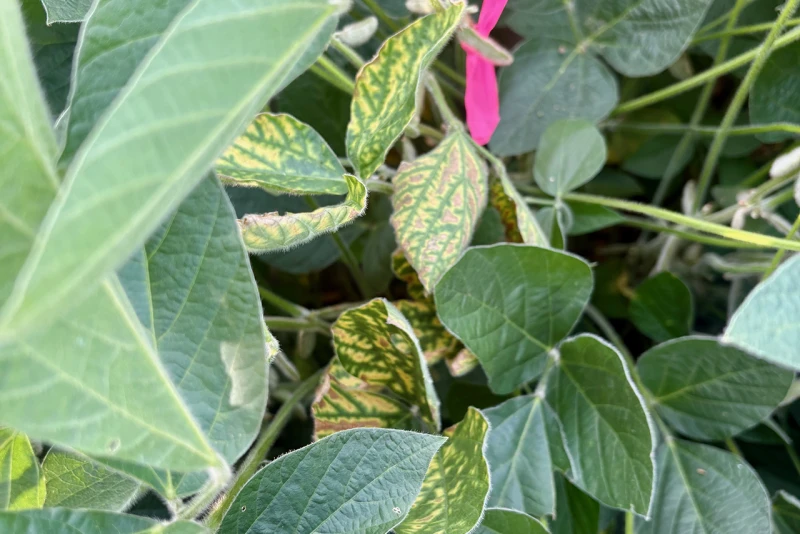
Robigo’s lead product is being developed to control Sudden Death Syndrome (SDS) in soybeans, a disease that can cause significant yield losses for growers.
The company says its first-year field trials, conducted across several locations in the US Midwest, showed disease-control performance comparable to a leading chemical pesticide seed treatment.
Robigo also says its product could provide this level of control at approximately half the cost of the chemical treatment.
These results are based on the company’s reported field trials, and further testing and regulatory review will be important in determining commercial performance.
A second product targets Fusarium wilt
Robigo’s second product targets Fusarium wilt, a major disease affecting crops including lettuce and berries.
In one trial conducted under high disease pressure, the company reported a threefold increase in yield compared with untreated controls.
Wallace cautioned that the result should not be interpreted as a guaranteed threefold yield increase across future trials. Instead, she described the result as evidence of strong recovery under particularly severe disease pressure.
Designed for existing farming practices
One of the challenges facing biological crop-protection products is the need for growers to adopt new handling, storage or application practices.
Robigo says it has designed its soybean product to operate as a direct replacement for existing chemical seed treatments.
The microbial product can be applied to seed and, according to the company, does not require cold-chain storage. This could allow growers to incorporate the biological treatment into existing planting systems without significant changes to their normal practices.
The company has also conducted compatibility trials with other seed-applied chemistries.
Fermentation-based production
Robigo’s technology also relies on microbial fermentation for manufacturing.
The company says its microbes can be produced using established industrial-scale fermentation infrastructure, potentially providing a cost-effective manufacturing route compared with the synthesis of complex chemical compounds.
Once applied in the field, the microorganisms are designed to produce the active biological components responsible for their crop-protection effects.
Commercialisation targeted for 2028 and 2029
Robigo is targeting a commercial launch of its SDS product in 2028, followed by its Fusarium wilt product in 2029.
The company says regulatory review is currently the key factor influencing those timelines, rather than manufacturing capacity.
If successfully developed and approved, the products would add to the growing range of biological crop-protection technologies seeking to combine microbial biology with modern engineering and computational design.
For African agriculture, developments in biological crop protection are particularly relevant as producers face pressure to improve productivity while managing soil health, input costs, pest and disease resistance, and environmental sustainability.
However, the suitability of engineered microbial products for African farming systems will ultimately depend on factors including regulatory approvals, local field performance, crop-specific disease pressure, affordability, farmer adoption and compatibility with existing agricultural practices.