
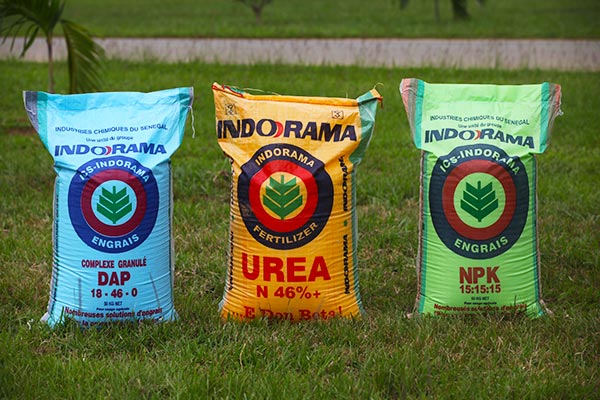
Indorama Eleme Fertilizer & Chemicals Limited is advancing a major fertilizer manufacturing expansion in Nigeria, with plans to construct a fourth production line at its industrial complex in Eleme, Rivers State. The US$256.6 million investment is expected to increase annual urea production capacity by approximately 33%, strengthening domestic fertilizer availability and expanding the country’s export potential.
The project gained momentum on 4 November 2026, when South Korean engineering and construction company Daewoo Engineering & Construction announced that it had received a contract award letter from Indorama for the construction of the new production line.
The contract is valued at 350 billion South Korean won, equivalent to approximately US$256.6 million.
New production line to increase urea output
The proposed production line will incorporate facilities capable of producing approximately 2,300 tonnes of ammonia and 4,000 tonnes of granulated urea daily.
According to project documentation published by the African Development Bank (AfDB) on 27 October 2026, the expansion is expected to increase the Eleme complex’s annual urea production capacity from approximately 4.2 million tonnes to 5.6 million tonnes once operational.
This represents a capacity increase of around 1.4 million tonnes annually and will complement the facility’s three existing production lines.
The additional capacity is expected to strengthen Nigeria’s position in the global nitrogen fertilizer market while supporting the growing demand for agricultural inputs across Africa.
Gas pipeline infrastructure to support production
The expansion includes supporting infrastructure designed to secure reliable natural gas supplies, a critical feedstock for ammonia and urea manufacturing.
A major component involves constructing an approximately 65km natural gas pipeline connecting the Eleme complex to Awara in Imo State.
Together with an existing 11km pipeline linked to the Assa North-Ohaji South (ANOH) gas processing plant, the new infrastructure will establish a gas supply network of approximately 76km to support the expanded manufacturing operations.
Reliable gas availability will be essential for maintaining production efficiency and ensuring consistent fertilizer output from the additional production line.
Port infrastructure expansion to strengthen exports
Indorama also plans to upgrade port infrastructure at Onne through its subsidiary, MM FZE, to accommodate increased fertilizer production and distribution volumes.
The proposed improvements include an additional urea storage warehouse, upgraded unloading and conveying equipment, and an extension of the quay.
These investments are intended to improve fertilizer handling, storage and transportation while increasing the complex’s capacity to serve international markets.
The port improvements will play an important role in connecting increased domestic manufacturing capacity with export markets.
US$1.25 billion financing programme supports investment
Financing for the expansion and associated infrastructure forms part of a US$1.25 billion syndicated debt programme managed by the International Finance Corporation (IFC).
Dutch development bank FMO indicated on 14 September 2026 that it intended to contribute US$150 million through long-term senior debt financing, subject to the financing process.
The broader financing programme is designed to support Indorama’s investment in fertilizer manufacturing capacity and related infrastructure.
Nigeria’s growing nitrogen fertilizer industry
The investment comes amid significant growth in Nigeria’s domestic nitrogen fertilizer manufacturing industry.
According to the International Fertilizer Development Center (IFDC), Nigeria’s urea production increased from approximately 1.44 million tonnes in 2020 to 4.18 million tonnes in 2024, reflecting substantial growth in local manufacturing capacity.
Indorama’s planned expansion is expected to build on this progress by increasing production capacity, improving fertilizer supply reliability and strengthening the country’s participation in international fertilizer markets.
Once completed, the fourth production line and associated gas and port infrastructure could further strengthen Nigeria’s fertilizer industry while supporting agricultural input availability, regional trade and the development of domestic agro-industrial value chains.