

15.7 C
Johannesburg
June 17, 2026
Agribusiness Featured News Technology

Orffa Expands Reach in China Through Strategic Partnership with Co-Innova

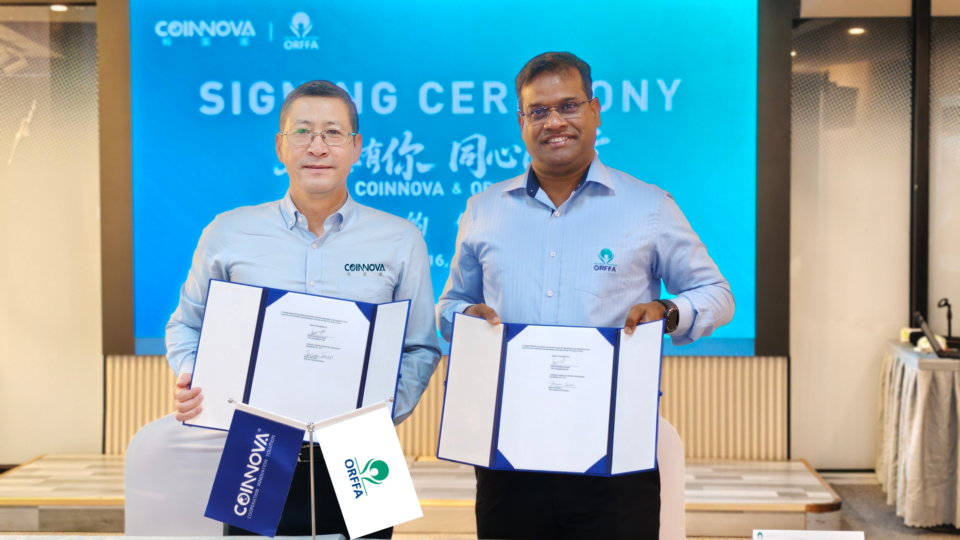
Orffa, a global leader in feed additive solutions, is pleased to announce a strategic collaboration with Co-Innova Animal Nutrition Technology (Shanghai) Co., Ltd. to strengthen its presence in China. This partnership will enable the distribution of two of Orffa’s flagship innovations — Excential Energy Plus and Excential Selenium 4000 — across key regions in China.

Excential Energy Plus is a next-generation nutritional emulsifiers, which can improve nutrient digestibility and thus improve energy efficiency. Excential Energy Plus is GFLI certified, supporting feed manufacturers and integrators in reaching their climate goals. Excential Selenium 4000 is a highly bioavailable selenium source that supports livestock’s immune functions, fertility, and oxidative stability. Both products are well-established in global markets and validated by extensive scientific research.

The cooperation marks a significant step in Orffa’s continued efforts to deliver tailor-made, science-backed solutions to producers in the Chinese market. With Co-Innova’s strong local network and technical capabilities, more customers will now gain access to Orffa’s innovative feed additives designed to improve efficiency, health, and sustainability.

“We are committed to bring Orffa’s proven solutions closer to our customers in China,” said Ramakanta Nayak, Managing Director Asia Pacific, Orffa. “Co-Innova’s technical expertise and understanding of local market needs align with our objective to provide targeted, high-value solutions to the Chinese livestock industry.”

“It is a privilege to collaborate with Orffa, a company recognized for its scientific excellence and innovation,” said Dr. Brian Sun, Chairman & CEO of Co-Innova. “With the addition of Excential Energy Plus and Excential Selenium 4000 to our portfolio, we are well positioned to support Chinese producers in optimizing their livestock production.”

This partnership reflects Orffa’s continued investment in the Asia-Pacific region and its goal to deliver practical, innovative, and sustainable solutions for animal nutrition.

About Orffa
Orffa develops and delivers innovative and sustainable feed solutions worldwide. Through advanced technology and deep market knowledge, Orffa helps livestock farmers and feed producers optimize animal health and performance.
For more information, visit www.orffa.com.

About Co-Innova Animal Nutrition Technology (Shanghai) Co., Ltd.
Co-Innova Animal Nutrition Technology (Shanghai) Co., Ltd. is an innovative team deeply rooted in China’s feed additive industry. With “cooperation and innovation” at the core of its vision, Co-Innova is committed to providing the industry with specialty products that offer high cost-effectiveness and core value through cutting-edge technologies and in-depth collaboration. Furthermore, the team delivers tailor-made system solutions built on strong professional expertise.

Related posts

How Sustainability Can Boost Profit Margins for African Food Processors By Staff Reporter -June 3, 20260356 By Jay O’Nien, Sustainability Officer, Bühler Group Across Africa’s food and feed processing sectors, sustainability is increasingly moving to the centre of operational decision-making. Importantly, this shift is not being driven by environmental commitments alone. In many cases, it is being driven by something far more immediate: operational efficiency, profitability, resilience, and long-term competitiveness.Food Processors For processors across the continent, energy costs remain volatile and often high. Water availability is emerging as a significant operational concern in across regions. Post-harvest losses continue to place pressure on both profitability and food security. At the same time, export markets and international buyers are introducing more stringent requirements around traceability, carbon footprint, and resource use. Against this backdrop, sustainability is no longer simply about compliance or reputation. It is increasingly becoming a core business consideration. At Bühler, our sustainability strategy is built around what we call the “50/50/50” commitment: our goal to have solutions ready that can reduce energy consumption, waste, and water use by 50% across customer value chains. The important point is that many of these technologies already exist today.Food As part of our 2025 lifecycle assessment work across 15 industrial value chains in food, feed, and advanced materials, we found that reductions of at least 50% were achievable in one or more key environmental dimensions in 11 of those value chains. In every assessed value chain, more than 35% savings were achievable in at least one category. Sustainability and operational improvements go hand in hand These findings matter because they demonstrate that sustainability improvements are often directly linked to operational improvements. Lower energy consumption means lower operating expenditure. Better yield means less raw material loss. Reduced waste frequently translates into improved process efficiency and higher profitability. In practice, the most accessible opportunities for African processors lie in fundamental operational areas. Drying efficiency, grain storage, yield optimisation, energy monitoring, process control, and waste reduction all offer meaningful potential returns. Improved storage and drying infrastructure, for example, can significantly reduce post-harvest food losses, an issue with both economic and food security implications across the continent. Yield improvement is particularly important because it creates both economic and environmental benefits. Every tonne of raw material lost during processing represents wasted land, water, energy, fertiliser, logistics, and labour upstream in the value chain. Improving process efficiency therefore helps reduce environmental impact while strengthening commercial performance.Grains & Pasta Importantly, sustainability adoption in Africa is not uniform. Conditions vary significantly between countries, sectors, and processors. Access to reliable and affordable energy remains a challenge in numerous markets. Financing constraints can make capital-intensive upgrades difficult to prioritise. Water stress continues to affect both agricultural production and industrial operations in several regions. Reliable baseline data is critical One of the less discussed challenges is measurement itself. Without reliable baseline data on energy consumption, water use, waste generation, or yield loss, it becomes difficult for processors to identify where improvements are possible or to build a credible investment case for change.

Brenna

Swine fever outbreak detected on farm in South Africa

Brenna

Dragon Money Драгон Мани обзор платежных методов.369

Brenna