

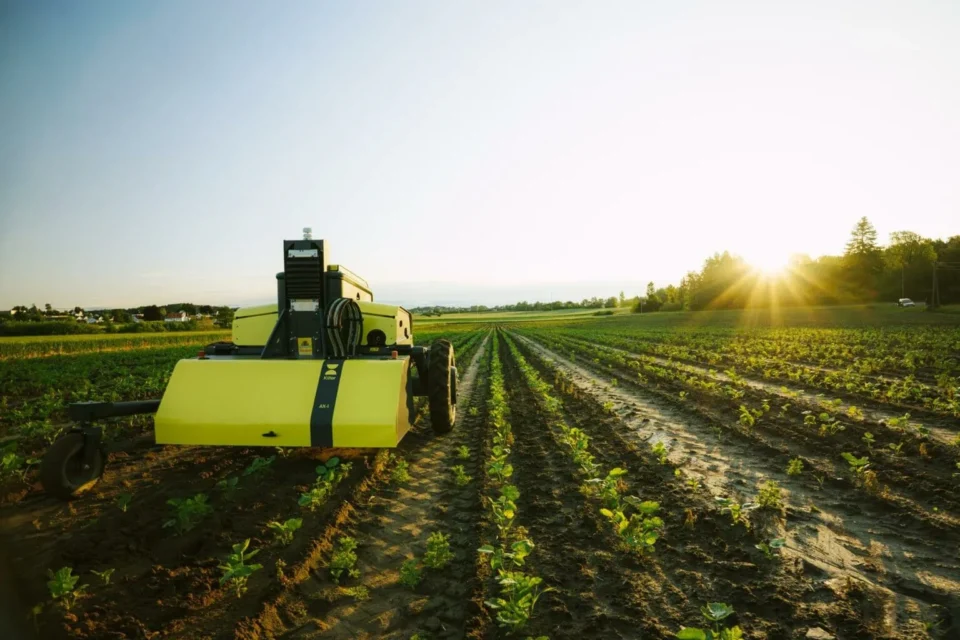
As African agriculture embraces precision technology, autonomous machinery could help farmers reduce input costs, address labour shortages and improve crop productivity. Kilter’s AX-1 autonomous weeding robot offers one example, using precision micro-droplets to target weeds while minimising herbicide use.
According to Kilter, AX-1 has helped growers avoid more than 1 million litres of herbicide mixture in under eight months across five countries. The company calculates the figure using telemetry data that records every 1 µL droplet applied and compares the actual volume used with the estimated 250 litres per hectare required for conventional broadcast spraying.
Precision weed control
Kilter Managing Director Anders Brevik says the technology is particularly suited to high-value vegetables, including root crops and leafy greens.
“Root vegetables have a long growth cycle, and keeping weeds under control all the way through it pays off at harvest,” he says.
Leafy vegetables can also benefit because their short growing cycles create narrow windows for effective weed control. Precise and repeatable treatment can help farmers manage weeds while reducing unnecessary chemical application.
For African producers, the technology could be relevant to both larger commercial farms and specialised vegetable operations, provided the equipment can be adapted to local crops, field conditions and production systems.
Beyond herbicide savings
Kilter says AX-1 can reduce herbicide use by an average of 97 per cent, while achieving up to 99 per cent drift reduction. The company also reports yield increases of 30–40 per cent in trials, alongside more uniform crops and a higher proportion of marketable produce.
Labour is another potential benefit.
“AX-1 runs autonomously, freeing up hours that went into spraying or hand weeding in a sector where seasonal labour is scarce,” Brevik says.
However, autonomous technology does not remove the need for farmer decision-making. Growers still determine which products to use, when to treat and how to manage their crops.
What should farmers consider?
Brevik recommends that farmers assess how an autonomous machine will perform under their specific conditions.
“How does it perform in my crop, my soil and my conditions, and can I see it running on a farm like mine?” he asks.
Farmers should also consider compatibility with existing equipment and field layouts, as well as access to local technical support, spare parts and maintenance.
Kilter says its fleet has recorded approximately 20,000 hours of autonomous operation in 2026, with its most heavily used machines exceeding 1,700 hours.
For African agriculture, where farming systems vary significantly across regions, successful adoption will depend on whether autonomous technology delivers reliable and measurable value in local conditions.
As precision agriculture continues to develop, technologies that combine automation, targeted input application and data-driven decision-making could play an increasingly important role in helping African farmers improve efficiency, manage costs and produce more sustainably.