

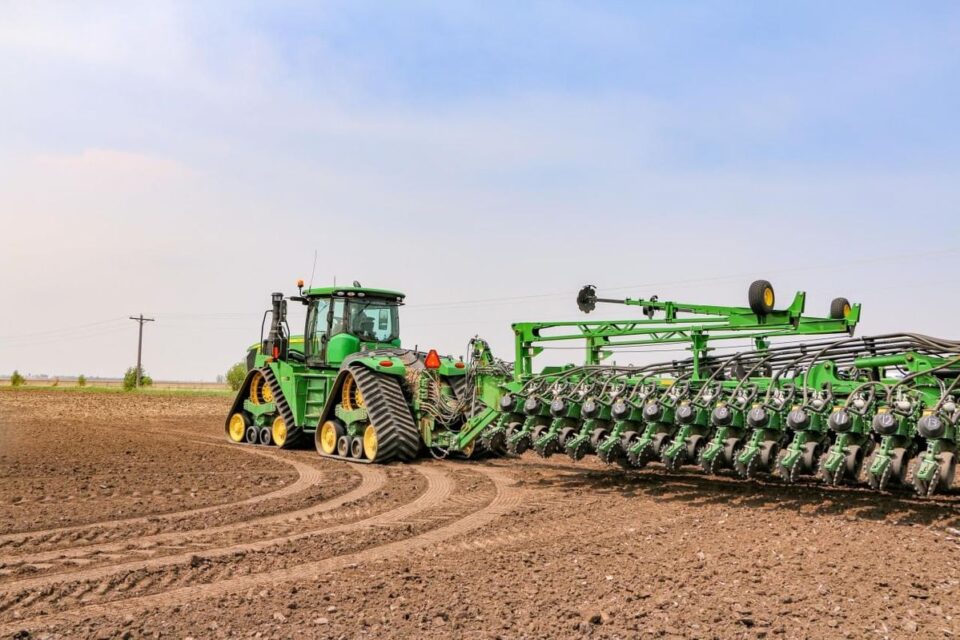
Africa’s agricultural tractor market is entering a period of significant growth, driven by rising demand for mechanisation, digital machinery-access platforms, local assembly and the early adoption of electric farm equipment.
Industry estimates vary depending on market definitions and methodologies. Some projections place Africa’s agricultural tractor market at around $1.8 billion in 2026, growing to approximately $3.54 billion by 2035. Another assessment estimates the broader tractor and agricultural machinery market at about $2.58 billion in 2026, rising to $3.26 billion by 2031.
While the figures differ, they point to the same broader trend: agricultural mechanisation is gaining momentum across Africa after decades of relatively low tractor availability compared with other major agricultural regions.
Demand for Mechanisation Is Rising
Several factors are contributing to the expansion of Africa’s tractor market.
Government-supported financing, equipment subsidies and hire-purchase programmes are helping reduce the high upfront cost of machinery. At the same time, digital tractor-hire platforms are allowing smallholder farmers to access equipment on a pay-per-use basis rather than purchasing tractors themselves.
Local assembly is also becoming increasingly important. Manufacturing tractors from completely knocked-down (CKD) kits within African markets can reduce transportation costs and, in some cases, help manufacturers and buyers manage exposure to foreign-exchange fluctuations.
These developments are creating new models for agricultural mechanisation, particularly for farmers who need access to machinery but cannot justify owning and maintaining a tractor year-round.
Where Tractor Demand Is Growing
Nigeria remains one of the major markets for agricultural machinery, supported by government-backed agricultural financing and mechanisation initiatives.
Kenya is also seeing increasing demand for tractors and precision agricultural implements, particularly among commercial farms and horticultural producers. Machinery is increasingly being used to improve consistency, efficiency and productivity across larger farming operations.
In Kenya and Tanzania, farmer cooperatives are also helping reduce the cost of machinery access by allowing multiple farmers to share equipment and spread rental costs across several farms.
This approach is part of a broader shift toward mechanisation-as-a-service, where farmers pay for access to equipment when they need it rather than carrying the full cost of ownership.
Commercial farms are simultaneously expanding their machinery fleets as they seek to increase production, support multiple cropping cycles and improve operational efficiency.
Electric Tractors Begin to Enter the Market
One of the most notable developments is the gradual emergence of electric tractors and other electrically powered agricultural equipment.
Electric tractors currently represent only a small part of Africa’s overall tractor market, but interest is growing as farmers and equipment manufacturers look for alternatives to conventional diesel-powered machinery.
The potential advantages include lower fuel dependence and reduced operating emissions. However, electric agricultural equipment faces several challenges, particularly in rural areas where reliable electricity and charging infrastructure can be limited.
Solar energy could provide part of the solution. Solar-powered irrigation systems are already being adopted in some agricultural communities, creating opportunities for renewable-energy infrastructure to support the future charging and operation of electric farm machinery.
Local Assembly Could Become More Important
Africa remains heavily dependent on imported tractors and agricultural implements. This leaves equipment prices vulnerable to currency fluctuations, shipping costs and international supply-chain disruptions.
Local assembly using CKD components offers one potential way to reduce some of these pressures.
Instead of importing fully assembled tractors, manufacturers can import components and complete assembly closer to the end market. This can potentially reduce logistics costs while creating opportunities for local manufacturing skills, servicing and parts supply.
For African farmers, stronger local equipment ecosystems could also make maintenance and after-sales support more accessible.
The Role of Digital Platforms
Technology is also changing how farmers access agricultural machinery.
Digital tractor-hire and leasing platforms can connect farmers who need equipment with machinery owners and service providers. These systems can make it easier to schedule tractors, organise payments and coordinate machinery across multiple farms.
For smallholders, this model could be particularly important because access to machinery may be more valuable than ownership itself.
The combination of digital platforms and shared machinery is creating a different approach to mechanisation — one based on access, utilisation and affordability rather than simply increasing the number of tractors sold.
What Comes Next?
Africa’s agricultural mechanisation story is moving beyond traditional tractor sales.
Government financing programmes, machinery-sharing models, digital hire platforms, local assembly and emerging electric tractor technologies are all contributing to a changing agricultural equipment landscape.
Electric tractors are unlikely to replace diesel machinery across the continent overnight. Infrastructure, affordability, battery technology, charging availability and farm operating conditions will all influence how quickly adoption develops.
However, the direction of the market is becoming clearer. Africa is moving toward a more diverse agricultural machinery ecosystem in which farmers can access equipment through ownership, leasing, shared cooperatives and digital services.
For a continent seeking to increase agricultural productivity while managing rising input costs and changing energy requirements, the next decade could make mechanisation an increasingly important part of Africa’s agricultural transformation.