

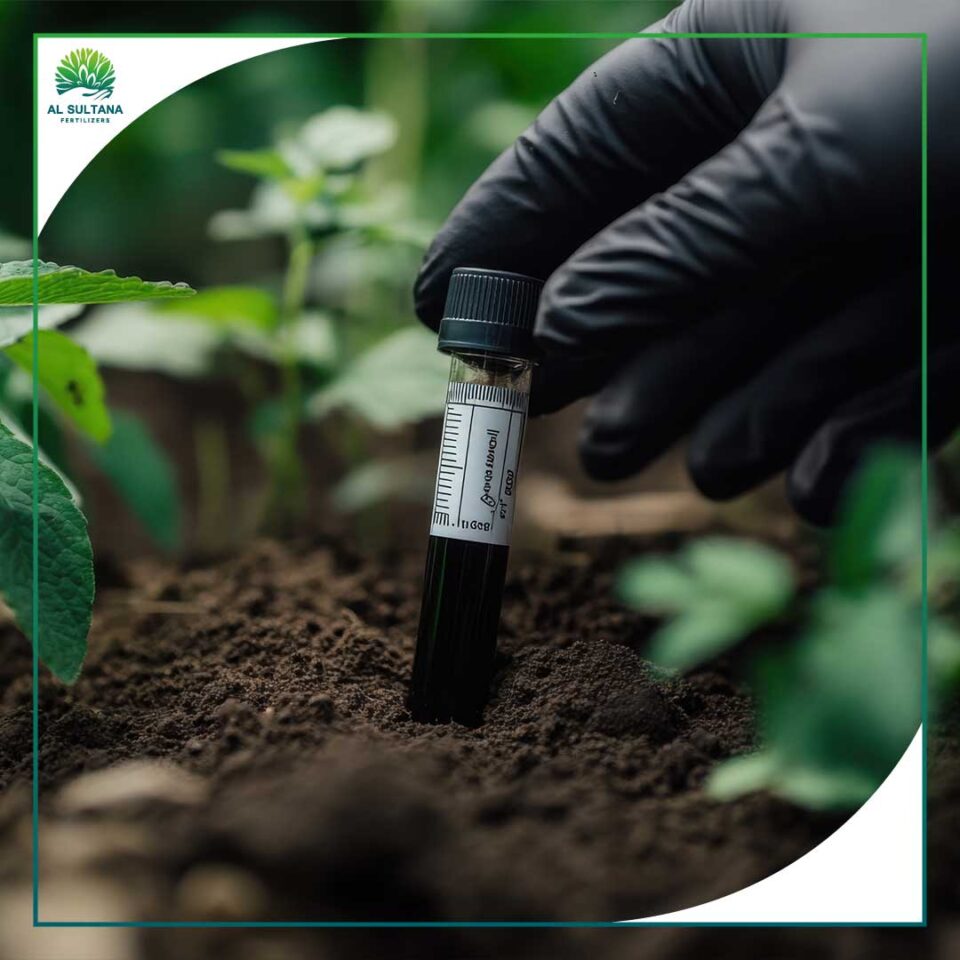
The Best Fertiliser Programme Starts with a Good Soil Sample
With fertiliser prices continuing to put pressure on agricultural production costs, growers are increasingly looking for ways to improve nutrient management and maximise returns on every fertiliser application. One of the most effective tools for achieving this is soil analysis.
However, the accuracy of any fertiliser recommendation depends heavily on the quality and representativeness of the soil sample collected. Even the most advanced laboratory analysis cannot deliver reliable results if the original sample does not accurately reflect conditions in the field.
Soil Sampling: The Foundation of Effective Fertiliser Management
Soil analysis provides valuable information about nutrient availability, soil fertility and the requirements of individual crops. This enables farmers to make more informed fertiliser decisions, avoid unnecessary applications and improve overall nutrient-use efficiency.
For growers without variable-rate application technology, collecting a consolidated soil sample for each land or management zone is often a practical and cost-effective approach.
Although this method may not identify smaller variations within a particular field, it provides a reliable starting point for developing fertiliser recommendations.
Farmers are also encouraged to supplement soil analysis with other sources of agricultural data, including yield maps, satellite imagery and field observations.
If certain areas consistently produce higher or lower yields, additional targeted soil samples can help determine whether these differences are linked to soil fertility or other factors such as soil compaction, poor drainage or crop diseases.
The number and density of soil samples should ultimately reflect the level of precision a grower wants to achieve.
As Truter explains, more intensive soil sampling becomes increasingly valuable when farmers want to implement more targeted nutrient management and fertiliser application strategies.
How to Collect a Representative Soil Sample
The quality of soil analysis begins in the field, long before a sample reaches the laboratory.
According to Truter, even the most advanced laboratory cannot produce representative results if the soil sample was collected incorrectly.
For grain production, proper sampling involves collecting several sub-samples from the same land or management zone and mixing them thoroughly to create one representative composite sample.
Consistency is particularly important when collecting these samples. Soil should be taken at the same depth throughout the sampling area because nutrient concentrations can vary significantly between soil layers.
Unlike plant or leaf samples, soil samples are relatively stable and do not necessarily need to reach the laboratory immediately after collection.
However, proper collection, handling and documentation remain essential to obtaining accurate results.
The Fertilizer Association of Southern Africa’s fertiliser guidelines recommend recording as much relevant information as possible when submitting soil samples. This helps laboratories and agricultural advisors develop more accurate and practical fertiliser recommendations.
Important information to record includes:
Date of sampling and size of the land.
Current and previous crops.
Cultivation practices and previous fertiliser applications.
Previous season’s crop yield and any production challenges.
Planting date, particularly for permanent crops.
Irrigation system, where applicable.
Previous liming practices.
Soil sampling depth and root depth.
Soil consistency, structure and permeability.
Land slope and aspect.
Rainfall patterns and other relevant climatic conditions.
Farmers should also collect sufficient quantities of soil from each sampling point to ensure that the final composite sample is representative.
Once the sub-samples have been collected, they should be mixed evenly until approximately 1kg of soil is obtained for laboratory analysis.
Samples must be placed in clean plastic bags. Bags previously used to store fertiliser, salt, baking soda or other substances should never be used, as residues may contaminate the sample and compromise the results.
For meaningful comparisons over time, soil samples should also be collected from the same locations and at approximately the same time each year. This allows growers to monitor changes in soil fertility and evaluate the effectiveness of their nutrient management programmes.
Choosing the Right Soil Testing Laboratory
Selecting a reliable laboratory is another important step in developing an effective fertiliser programme.
Truter recommends that growers consult an agronomist or technical advisor when choosing a laboratory and deciding which soil analyses should be conducted.
Accredited laboratories generally follow standardised testing methods and quality-control procedures, helping to ensure consistent and reliable results. However, selecting the correct tests is just as important as choosing the laboratory.
The most appropriate analyses depend on several factors, including soil type, soil pH, crop requirements and the fertiliser recommendation methods used in the production region.
An experienced agronomist or technical advisor can help farmers identify the tests that will provide the most relevant information for their specific farming conditions.
Truter also cautions growers against accepting laboratory results without considering whether they make sense in relation to actual field conditions.
Although laboratories follow established quality procedures, human error can still occur. If results appear unusual or contradict what is being observed in the field, farmers should discuss the findings with the laboratory or their agronomist.
Many laboratories retain soil samples for a specified period after analysis, making it possible to request a re-analysis if there are concerns about the original results.
Ultimately, the value of soil analysis depends not only on accurate laboratory testing but also on the correct interpretation of the findings.
The Importance of Laboratory Quality Assurance
One way farmers can gain additional confidence in laboratory results is by checking whether a laboratory participates in recognised quality assurance programmes.
The Agri-Laboratory Association of Southern Africa (AgriLASA) is a voluntary certification body that monitors participating laboratories through regular sample testing.
Under its quality assurance programme, participating laboratories receive monthly samples for analysis. Their results are statistically evaluated to assess testing accuracy and consistency.
Laboratories are responsible for maintaining acceptable quality standards, with certificates issued annually by AgriLASA.
Several laboratories affiliated with AgriLASA also participate in international quality assurance programmes, further supporting efforts to maintain reliable analytical standards.
Turning Soil Analysis into Better Fertiliser Decisions
As agricultural input costs continue to challenge farm profitability, effective nutrient management is becoming increasingly important.
A well-planned soil sampling programme gives growers a clearer understanding of their soil’s fertility status, helps identify nutrient deficiencies and supports more accurate fertiliser recommendations.
However, reliable results depend on a combination of representative sampling, appropriate laboratory testing and sound agronomic interpretation.
By investing in proper soil sampling and working with qualified agricultural advisors, farmers can make better-informed fertiliser decisions, improve nutrient-use efficiency and build more sustainable crop production systems.
A successful fertiliser programme does not begin with the application of nutrients. It begins with understanding the soil.