

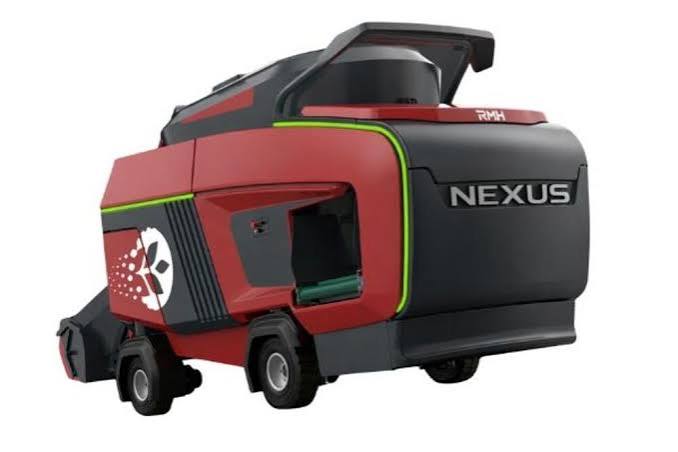
RMH Nexus: Autonomous Electric Feeding Robot
Israeli agricultural machinery manufacturer RMH is developing the Nexus, an autonomous electric feeding robot designed to load, mix and distribute livestock feed with minimal human intervention.
The machine is attracting attention because it could reduce the need for tractors, diesel and continuous operator involvement in livestock feeding. RMH has been demonstrating the technology in Europe, with a market launch targeted for 2028.
How the Nexus works
The Nexus has a 6 m³ mixing tub with two vertical augers. Unlike conventional feeding systems that may require a separate feed kitchen, the robot is designed to travel to the feed or silage clamp, load the ration, mix it and then deliver it to the animals.
The robot uses RTK GPS for outdoor navigation and other positioning technologies indoors, including SLAM-based navigation. LiDAR sensors help detect obstacles, allowing the machine to operate around buildings and livestock.
It also features four-wheel drive and four-wheel steering, giving it greater manoeuvrability in confined farm environments.
Electric power and battery swapping
The Nexus is powered by a 48 kWh battery, providing approximately 2.5 to 3 hours of operation, depending on working conditions.
One of its most interesting features is RMH’s patented battery-swapping system. The battery can reportedly be replaced in around four minutes, allowing the robot to return to work rather than waiting for a full recharge.
For African farms investing in solar power, this could become particularly interesting. Renewable electricity could potentially be used to charge spare batteries and support feeding operations while reducing dependence on diesel.
Why it matters for Africa
The technology could address several challenges facing larger livestock operations.
Automating feeding could reduce the amount of time workers spend driving tractors and mixer wagons, while more consistent feeding schedules could improve farm efficiency.
Electric propulsion could also reduce diesel consumption, although the overall economic benefit will depend on the machine’s purchase price, electricity costs, battery life, maintenance and local servicing.
These factors will be particularly important in Africa, where access to machinery technicians, spare parts and reliable infrastructure can determine whether advanced agricultural technology succeeds.
Still a technology to watch
The Nexus is not yet a proven solution for African farms. RMH is continuing development, and commercial availability is expected around 2028.
The next important step will be seeing how the robot performs under real commercial conditions, including heat, dust, uneven terrain and long working hours.
If RMH can demonstrate reliable operation and competitive running costs, the Nexus could become part of a wider shift towards autonomous, electric and data-driven livestock farming.
For Africa’s growing commercial dairy and livestock sector, the bigger question may soon be not whether robots can feed cattle, but which parts of the feeding process still need a human operator.