

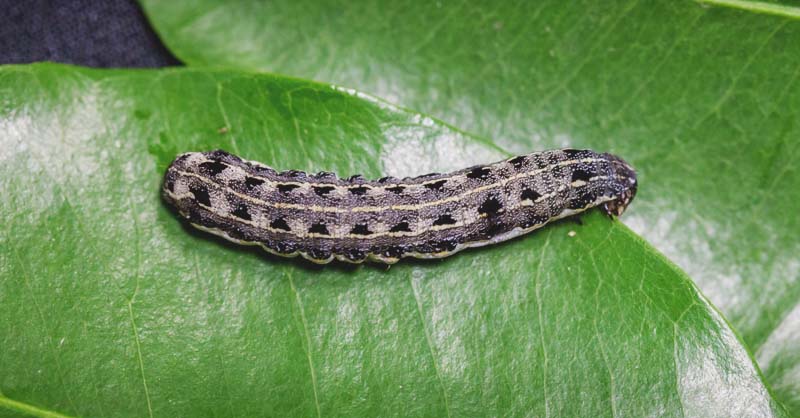
Farmers are being urged to prepare for cutworm outbreaks before planting, following recent seasons in which the pest caused significant damage to maize and, to a lesser extent, soybeans and sunflowers.
Although cutworm pressure has eased in some areas over the past two seasons, conditions can quickly favour renewed outbreaks. Early preparation and field monitoring can help reduce the risk of crop losses.
According to Syngenta insecticide specialist Gustav Venter, serious cutworm outbreaks in recent years have occurred in some areas where farmers use no-till or minimum-tillage systems.
While these systems provide important soil-health benefits, crop residues, weeds and soil clods can create shelter and food sources for cutworm larvae.
“The most effective non-chemical preventative measure is to keep the field free of weeds and other potential food sources for 35 to 40 days before planting,” says Venter.
Maintaining a weed-free field during this period can help reduce available food for larvae already active in the soil and lower populations before the crop is established.
Where conventional tillage is practised, soil cultivation during roughly September and October can also help disrupt cutworm pupae and reduce population pressure.
Scout Before Planting
Farmers should inspect fields for cutworm before planting, particularly where weeds, green organic material or crop residues are present.
“Larvae can sometimes be found by digging into the soil to a depth of around 5 to 10cm, although they can be difficult to spot,” says Venter. “Pupae are particularly hard to see because of their brown colour.”
Early detection is important because once seedlings begin showing damage, the opportunity for preventative control is reduced.
“The most obvious sign of cutworm is a young maize plant that has been cut off at soil level,” Venter explains. “Smaller larvae may instead cause small holes in leaves, which can easily be confused with damage from other pests.”
Timing and Placement Matter
Where chemical control is required, application timing and placement are important. A ground spray applied to relatively clean soil can improve the opportunity for insecticide to reach larvae.
Heavy layers of maize husks, soil clods and other material can shield larvae from the spray and reduce control effectiveness.
“Don’t wait for severe damage,” Venter advises. Once significant stand losses have occurred, control becomes more difficult and replanting may be necessary.
Baits applied to moist soil may provide another control option in some situations, while additional insecticide applications may be appropriate depending on local conditions and infestation levels.
Farmers should also record areas where cutworm infestations occur and use this information when planning the following season. Neighbouring fields should be monitored as well, as adult moths can move between farms and lay eggs in nearby fields.
Prevention Starts Before Planting
Cutworm cannot always be prevented, but early preparation can reduce the risk of serious crop damage.
Keeping fields free of weeds ahead of planting, scouting for larvae, identifying areas with a history of infestation and applying control measures at the appropriate time can help farmers protect plant stands and reduce the risk of costly losses during the 2026/27 season.