

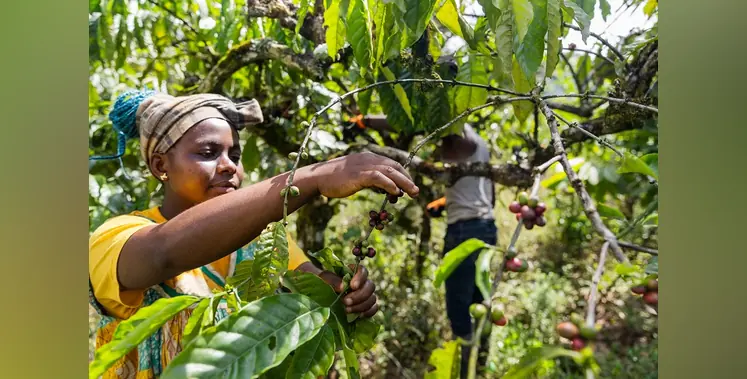
Farmers in Kirinyaga and Embu counties are adopting regenerative and climate-smart farming practices aimed at improving soil health, increasing crop productivity and strengthening resilience to changing weather conditions.
The work forms part of the six-year Mt Kenya Sustainable Landscape and Livelihoods (MSULi) programme, implemented by the Rainforest Alliance with support from the IKEA Foundation. Since its launch in 2020, the initiative has worked with more than 55,000 farmers across the Mt Kenya region.
Improving crop productivity
Farmers participating in the programme have adopted improved tea clones and coffee seedlings, with reports of higher yields and improved produce quality.
The programme has also encouraged diversification through crops such as avocado and macadamia, helping farmers reduce dependence on individual crops while creating additional sources of income.
Access to affordable financing has further enabled farmers and agribusinesses to invest in improved production practices and climate-smart technologies.
Building healthier soils
A major component of the programme has been the adoption of regenerative soil-management practices.
Farmers have received training in compost production and the use of organic materials to improve soil fertility and reduce reliance on synthetic fertilisers and pesticides.
Improved soil structure and organic matter can increase the soil’s ability to retain moisture, helping crops withstand periods of reduced rainfall and prolonged dry conditions.
These practices are also contributing to the restoration of biodiversity across agricultural landscapes. Improved soil conditions and reduced dependence on chemical inputs can create more favourable environments for beneficial organisms and pollinators.
Restoring degraded agricultural land
Landscape restoration has been another important component of the initiative. More than 220 hectares of degraded forest have been restored, while over 500 hectares of degraded farmland have been rehabilitated across the Mt Kenya landscape.
The restoration work combines agricultural production with natural-resource conservation, helping improve the long-term condition of soils, water resources and surrounding ecosystems.
The programme has also established a Landscape Management Board, bringing together multiple stakeholders to coordinate conservation and sustainable agricultural activities beyond the project’s implementation period.
Combining traditional practices with modern knowledge
The approach combines traditional farming practices with modern agronomic knowledge.
Farmers are encouraged to use practices such as crop diversification, organic soil amendments and improved planting materials while adapting production systems to changing climatic conditions.
The MSULi programme has also supported the development of green enterprises and partnerships with financial institutions to improve farmers’ access to affordable financing for climate-smart agricultural investments.
For coffee and tea producers in the Mt Kenya region, the combination of improved genetics, healthier soils, diversified production and climate-adaptive management is providing a pathway towards more resilient and productive farming systems.
The experience also demonstrates how regenerative agriculture can extend beyond individual farms, linking soil restoration, biodiversity, crop productivity and landscape management into a broader approach to sustainable agricultural development.