

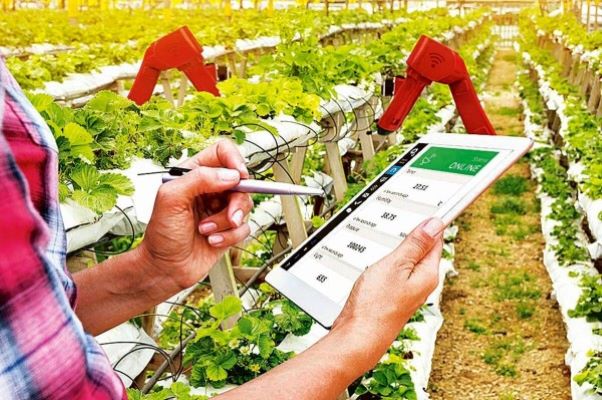
As African farmers face increasing pressure from climate change, soil degradation and rising production costs, the Food and Agriculture Organization of the United Nations (FAO) has launched a new digital platform designed to help growers identify the most suitable crops for their land, improving yields while promoting sustainable agricultural practices.
The new web-based application, known as CropSuit, combines soil data, climate information, topography, land cover and other environmental factors to recommend crops that are best suited to specific locations. By matching crops to local growing conditions, the platform aims to improve productivity, optimise fertiliser use and strengthen food security across vulnerable farming regions.
The launch comes at a critical time for Africa, where millions of smallholder farmers are grappling with unpredictable weather patterns, declining soil fertility and the growing impacts of climate change. According to the FAO, approximately 1.7 billion people worldwide live in areas affected by land degradation, making smarter land-use decisions increasingly important for sustainable food production.
Supporting Smarter Farming Across Africa
CropSuit forms part of FAO’s Soil Mapping for Resilient Agrifood Systems (SoilFER) programme, an international initiative supported by Japan and the United States that is helping countries strengthen their soil information systems through advanced mapping, geospatial technologies and digital decision-support tools.
Several African countries are already benefiting from the programme, including Ghana, Kenya and Zambia, where improved soil mapping and crop suitability assessments are helping governments, extension officers and farmers make better-informed agricultural decisions.
The platform builds on FAO’s Global Agro-Ecological Zoning (GAEZ) framework, expanding access to information on both commercial and indigenous crops that can contribute to improved nutrition, diversified farming systems and greater climate resilience.
Helping Farmers Choose the Right Crops
One of CropSuit’s greatest advantages is its ability to translate complex scientific data into practical recommendations that farmers and agricultural extension officers can use during seasonal planning.
Rather than relying solely on traditional planting practices, users can assess which crops are likely to perform best under local soil and climatic conditions, helping reduce production risks and improve returns on investment.
The platform also supports more efficient fertiliser application by ensuring that crop selection aligns with the characteristics of individual fields, reducing unnecessary input costs while promoting sustainable land management.
Zambia Demonstrates the Potential
Early results from Zambia illustrate the practical value of the technology. By combining detailed soil maps with rainfall and environmental data, CropSuit identified significant differences in crop suitability between neighbouring fields.
While some areas remained well suited to maize production, others showed stronger potential for crops such as cassava, cowpea and fonio, enabling farmers to diversify production and improve resilience to changing weather conditions.
This type of location-specific guidance can be particularly valuable across Africa, where farming conditions often vary considerably over short distances.
Strengthening Agricultural Decision-Making
Beyond supporting individual farmers, CropSuit is designed to assist governments, researchers, extension services and policymakers with agricultural planning and land-use management.
The SoilFER programme is also strengthening national soil laboratories, improving soil sampling, standardising analytical methods and developing high-resolution soil maps that provide more accurate recommendations on crop suitability, fertiliser management and sustainable farming practices.
By making this information freely available through an easy-to-use digital platform, FAO hopes to improve agricultural productivity while helping countries build more resilient and sustainable food systems.
Digital Innovation for Africa’s Food Security
As Africa’s population continues to grow, increasing agricultural productivity without degrading natural resources has become one of the continent’s biggest development priorities.
Digital technologies such as CropSuit have the potential to help farmers maximise the productivity of existing farmland, improve climate adaptation, reduce production costs and strengthen food security.
By turning scientific soil intelligence into practical field-level advice, the new FAO platform represents an important step towards smarter, more sustainable agriculture across Africa, empowering farmers to grow the right crops in the right places while building resilience against future climate challenges.
#Agriculture #AfricaAgriculture #FoodSecurity #ClimateSmartAgriculture #DigitalFarming #SmartFarming #FAO #CropSuit #SoilHealth #Agritech #SustainableAgriculture #SmallholderFarmers #ClimateResilience #AgInnovation #AfricanFarming