

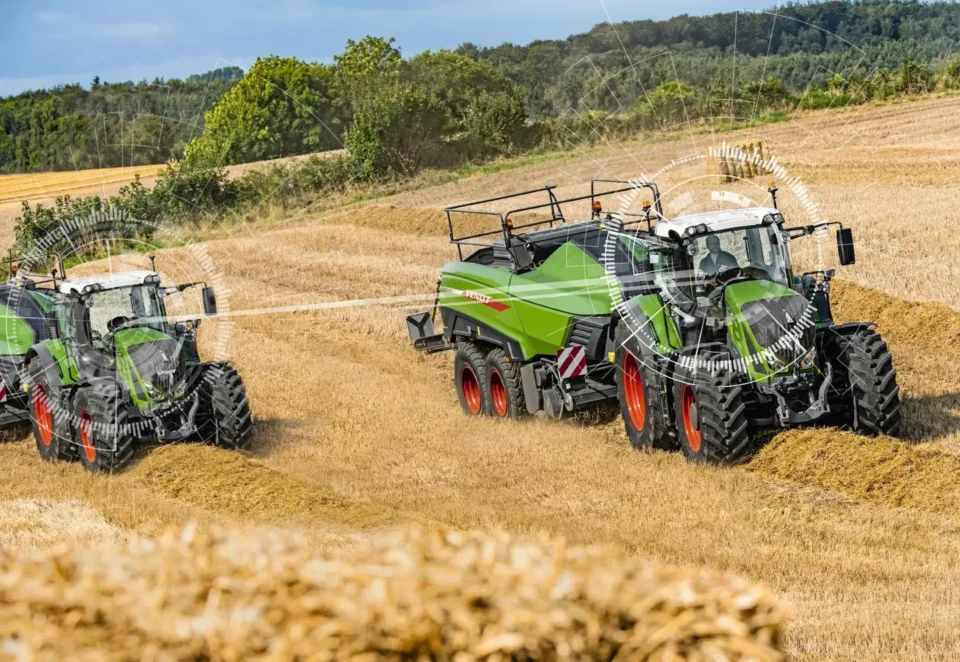
Agricultural machinery connectivity, artificial intelligence (AI) and autonomous equipment are reshaping modern farming. AGCO’s PTx technology portfolio demonstrates how mixed-brand machinery, precision agriculture and retrofit automation can help farmers improve operational efficiency, manage labour shortages and maximise productivity during critical planting and harvesting periods.
With seasonal workloads becoming increasingly demanding, delays in field operations can affect crop yields, increase input costs and compromise soil management. Connected machinery and autonomous field systems offer a potential solution by enabling equipment to share operational data, coordinate tasks and perform selected activities with less direct operator intervention.
Improving Connectivity Across Mixed Equipment Fleets
Commercial farming operations often rely on tractors, combines, sprayers and implements from different manufacturers. However, differences in software platforms and data systems can complicate communication between machines, leaving operators dependent on manual coordination and separate information systems.
AGCO showcased its precision agriculture technologies during its annual Tech Day at Stewart Farms near Yorkville, Illinois, demonstrating how digital tools can connect equipment across different brands and generations.
At the centre of this approach is PTx FarmENGAGE, a farm management platform designed to support operational planning, data management and connectivity across agricultural machinery. By bringing relevant machine and field information into a shared digital environment, the platform can help operators monitor activities and coordinate field operations more effectively.
The broader digital ecosystem also incorporates Panorama intelligence tools, which bring together information such as machine performance, yield data and field maps to support operational decision-making.
The Aurora AI assistant adds another layer of accessibility by enabling users to retrieve relevant information through natural-language queries. Rather than manually navigating multiple mapping layers and data files, operators can use voice or text commands to access information about machinery and field conditions.
Together, these technologies aim to simplify data management and help farmers make more informed decisions throughout the production cycle.
Improving Planting Precision Through Intelligent Technology
Accurate seed placement is fundamental to successful crop establishment. Consistent seed spacing and placement depth help promote uniform emergence, improve crop competition and support yield potential.
AGCO’s Momentum planter platform, combined with ArrowTube seed delivery technology, is designed to improve seed placement by managing seed movement from the metering system into the planting trench. Reducing seed bounce and maintaining consistent spacing can contribute to more uniform crop establishment.
When planting operations are connected to digital field mapping, producers can also compare planting performance with variations in field conditions. This information can support more informed decisions about planting practices and subsequent crop management.
Precision planting is particularly valuable where variable soil conditions, narrow planting windows and high operational demands leave little room for inconsistent field performance.
AI-Powered Weed Detection and Targeted Spraying
Crop protection is another area where artificial intelligence and machine vision are changing agricultural practices.
Traditional broadcast spraying applies herbicides across an entire treated area, including locations where weed pressure may be limited. Targeted spraying systems instead use optical sensors and image-processing technology to identify vegetation and activate selected spray nozzles where treatment is required.
The Fendt Rogator 900, equipped with the SymphonyVision weed-detection system, illustrates this approach. The technology uses camera-based sensing and AI-driven image analysis to distinguish target vegetation from surrounding ground or crop cover, enabling more precise application under suitable operating conditions.
By directing herbicide applications towards detected weeds, targeted spraying can reduce unnecessary chemical use, lower input costs and limit the amount of herbicide applied across a field.
Reduced and more targeted herbicide use may also support resistance-management programmes when combined with appropriate weed-control strategies. However, the effectiveness of these systems depends on factors such as weed density, vegetation characteristics, operating speed, environmental conditions and the performance of the detection and spraying equipment.
Accurate nozzle control and effective drift management remain essential to ensuring that targeted applications deliver the intended results.
Autonomous Field Logistics and Harvest Coordination
Harvesting places considerable pressure on farm logistics. Combining, grain transfer, tillage and fertiliser application often need to be coordinated within a relatively short seasonal window.
Labour shortages and poorly synchronised equipment can leave combines waiting for grain carts, delay the movement of harvested grain and prevent follow-on field operations from being completed when conditions are favourable.
AGCO’s PTx OutRun retrofit autonomy system is designed to address part of this challenge by enabling compatible existing tractors to perform selected grain-cart operations autonomously. Rather than requiring farmers to replace their entire machinery fleet, retrofit technology offers a potential route to introducing automation into established equipment.
In a coordinated harvesting workflow, an autonomous grain cart can move between the combine and designated unloading points, helping maintain grain transfer while reducing the need for continuous direct operator control of the cart tractor.
Automated guidance and coordinated movement can improve the timing of grain transfer, although safe operation depends on compatible machinery, suitable field conditions, system configuration and appropriate supervision.
The broader opportunity extends beyond harvesting. When field logistics are coordinated effectively, farmers can better schedule tillage, fertiliser application and other post-harvest activities.
Completing these tasks at the appropriate time can help preserve soil conditions, improve operational efficiency and support nutrient management. Fertiliser placement and incorporation must still be adapted to the production system, soil conditions and applicable environmental requirements.
Remote Diagnostics and Equipment Maintenance
As farms become more connected and automated, equipment reliability becomes increasingly important. Unexpected machinery failures during planting or harvesting can disrupt several operations simultaneously and result in costly delays.
AGCO’s FarmerCore service model supports equipment servicing through connected machinery information, remote diagnostics and digital service capabilities. Access to machine data can help technicians identify potential faults, assess maintenance requirements and prepare for repairs before travelling to a farm.
Where supported by the machine and service system, remote software updates can also help maintain equipment functionality and introduce improvements without requiring every update to be installed manually on-site.
By combining telematics with proactive maintenance planning, farmers and service providers can work towards reducing unplanned downtime and improving machinery availability during critical periods.
The benefits depend on reliable connectivity, accurate diagnostic information, compatible equipment and timely access to service personnel and replacement components.
The Future of Interoperable and Autonomous Agriculture
The move towards connected and autonomous agricultural machinery reflects a broader shift towards data-driven farm management.
Interoperability standards such as ISO 11783, commonly known as ISOBUS, support communication between compatible tractors, implements and control systems. These standards help address equipment integration challenges, although compatibility still depends on the functions supported by individual machines and software platforms.
Retrofit autonomy offers another important development by allowing farmers to introduce selected automated functions into existing machinery. This approach may reduce the need for complete fleet replacement and provide a more gradual path towards autonomous field operations.
At the same time, AI-powered crop sensing and targeted spraying are expanding the potential for more precise input application. Their performance should be evaluated using practical measures such as detection accuracy, application speed, chemical savings, weed-control effectiveness and operating costs.
For farmers, the objective is not simply to adopt more technology. It is to ensure that connected machinery, automation and precision tools work together to solve real operational challenges.
As labour availability, input costs and seasonal time pressures continue to influence agricultural production, integrated machine connectivity and field autonomy could become increasingly important components of efficient and sustainable farm management.