

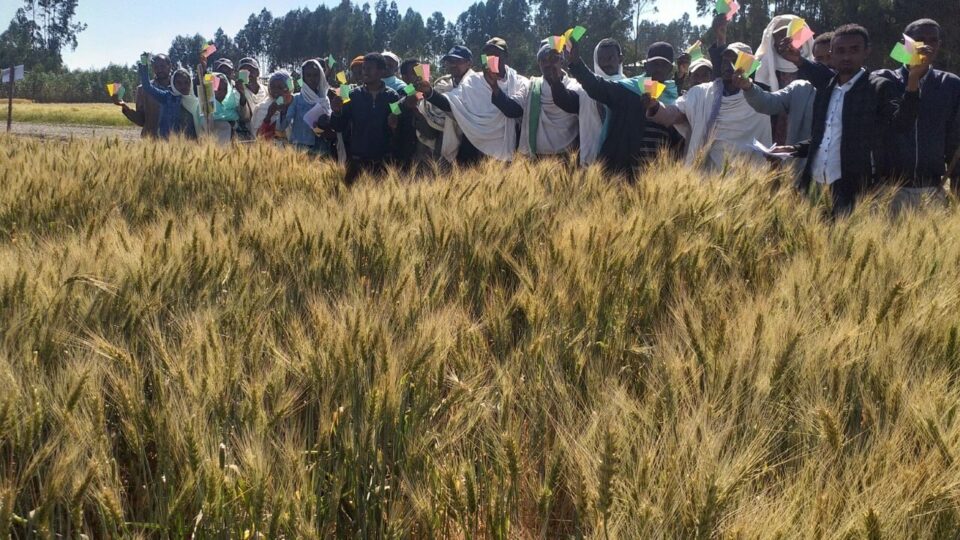
Zinc-Efficient Wheat Varieties and Targeted Fertilizer Use Boost Yields and Grain Nutrition in Ethiopia
New research across more than 600 locations in Ethiopia shows that combining zinc-efficient wheat varieties with targeted fertilizer application can improve grain yields and nutritional quality, offering a promising approach to addressing micronutrient deficiencies.
Ethiopian wheat farmers could improve both productivity and grain nutrition by planting zinc-efficient varieties and applying fertilizers based on local soil conditions, according to research by the International Maize and Wheat Improvement Center (CIMMYT) and its partners.
The multi-year study covered more than 600 locations across three major wheat-growing areas: Arsi Zone, East Shewa and North Shewa in the Amhara Region. Researchers found that combining suitable wheat genetics with targeted zinc fertilizer management increased the likelihood of achieving higher yields and greater zinc concentrations in grain.
Conducted under the CGIAR Sustainable Farming Program, the research highlights the importance of matching appropriate seed varieties with local soil conditions and effective crop management to improve agricultural productivity and address “hidden hunger”, a form of malnutrition caused by micronutrient deficiencies.
Wheat provides a substantial share of daily calories for millions of people, but conventional varieties may not contain enough zinc to meet nutritional requirements. Biofortification—the process of increasing the nutritional content of crops—can help improve dietary quality, particularly in communities with limited access to diverse, nutrient-rich foods.
Melka Wheat Variety Shows Genetic Advantage
A key finding was the performance of Melka, a zinc-efficient wheat variety compared with a conventional variety.
Researchers found that Melka offered advantages in grain yield and zinc accumulation, even without additional zinc fertilizer. In zinc-deficient soils, the probability of achieving both high yields and elevated grain zinc concentrations increased from near zero with the conventional variety to more than 27% with Melka under baseline conditions.
The results suggest that selecting wheat varieties capable of efficiently absorbing and accumulating zinc can provide a strong foundation for improving agricultural productivity and nutritional outcomes.
“Genetics gives us a strong starting point,” said Tesfaye Shiferaw Sida, a systems agronomist at CIMMYT, highlighting how appropriate crop management can build on the benefits of zinc-efficient varieties.
Targeted Zinc Fertilizer Application Improves Results
The study also found that the effectiveness of zinc fertilizer depends on soil conditions and application methods.
In soils with sufficient zinc, additional fertilizer provided limited yield benefits. In zinc-deficient soils, however, targeted fertilizer management played a more important role.
Applying zinc fertilizer to the soil at planting, known as basal application, was particularly effective in supporting grain yields. Foliar application, which involves spraying zinc directly onto plant leaves, was more effective at increasing zinc concentrations in the grain.
In zinc-deficient soils, combining Melka with a higher zinc fertilizer rate increased the probability of achieving both a yield of at least 4.5 tonnes per hectare and a grain zinc concentration of 40 milligrams per kilogram to approximately 75–80%.
These findings highlight the potential of combining improved crop genetics with appropriate fertilizer strategies to deliver benefits for both farmers and consumers.
Precision Farming Offers a Path to Better Nutrition
The research challenges one-size-fits-all fertilizer recommendations and underscores the importance of considering soil zinc levels, wheat variety characteristics and local growing conditions when developing agricultural advice.
By tailoring fertilizer applications to specific soil needs, farmers could improve nutrient-use efficiency while enhancing the nutritional value of harvested wheat.
The findings suggest that higher crop productivity and improved grain nutrition do not have to be competing objectives. Combining zinc-efficient wheat varieties with targeted fertilizer management could help Ethiopia strengthen food and nutrition security while supporting farmers’ yields and livelihoods.