

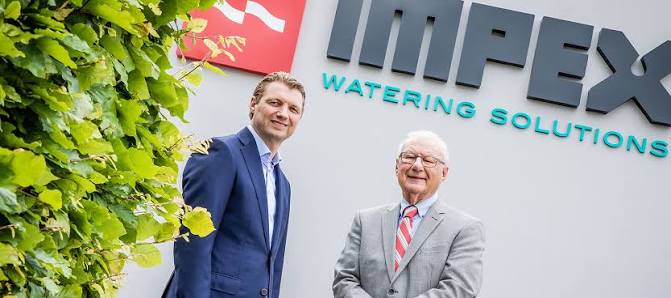
Impex Watering Solutions is promoting improved drinking-water systems designed to help African poultry farmers strengthen hygiene, support bird health and improve production performance.
The Dutch company specialises in drinking nipples and drinking-water systems for poultry, pigs and other livestock, with a focus on providing practical solutions that can be adopted by farmers at different stages of production.
Speaking at VIV Africa 2026 in Kigali, Rwanda, Impex Managing Director Richard Wentzel said the company aims to help poultry farmers transition from open water containers to simple, hygienic and eventually fully closed drinking systems.
“We are specialised in drinking systems for poultry,” Wentzel said, noting that many farmers across Africa still rely on backyard and small-scale production methods in which open containers are commonly used to provide water to birds.
Rather than encouraging farmers to invest immediately in fully automated installations, Impex advocates a gradual approach that allows producers to improve water hygiene using affordable, accessible solutions.
“One step can first be, not a complete automatic drinking system, but go to a bucket,” Wentzel explained, referring to simple systems fitted with drinking nipples beneath a water container. “That’s the first step to go into better hygiene for your animals. So, less mortality.”
Improving Water Hygiene Through Simple Solutions
Wentzel highlighted the risks associated with open drinking water, which can become contaminated with manure and other materials, exposing poultry to unhygienic water sources.
“Open water—they put manure in it, and they drink their own manure,” he said. “We always say this: would you drink this water?”
Impex believes that relatively simple changes to drinking-water systems can help farmers reduce contamination risks without requiring advanced technical skills or substantial investment.
The company’s bucket-based systems can be filled manually, making them a practical starting point for small-scale producers who are not yet ready to adopt fully automated drinking installations.
The longer-term objective is to help farmers progress towards closed drinking systems that provide cleaner, more controlled water supplies while reducing water wastage and supporting better flock management.
According to Wentzel, clean drinking water is an essential consideration in poultry production, with water hygiene playing an important role in animal health, production efficiency and overall farm performance.
Building Partnerships Across Africa
Impex’s participation in VIV Africa also reflects its commitment to developing long-term relationships with farmers, distributors and other industry stakeholders.
Attending the event for the fourth time, the company is using the exhibition to raise awareness about drinking-water hygiene, educate producers about available solutions and identify potential local dealers and business partners.
“We want to meet people, to educate people, to get relations with our company,” Wentzel said. “We want a long-term relationship with our customers. We’re looking for dealers.”
For poultry farmers, Wentzel’s message is that water quality deserves the same attention as feed, housing and other essential aspects of flock management.
“When you, as a farmer, walk into your house, you have to think about the water I’m giving,” he said. “The water I’m giving to my poultry, would I drink it myself?”
He added that clean drinking water is important not only for poultry health and performance but also for the wider food production chain, given that poultry meat and eggs are consumed by people.
With a history of developing drinking-water solutions dating back to 1971, Impex continues to position water hygiene as a central component of responsible livestock production. Its approach emphasises practical improvements that can help African poultry farmers adopt better drinking systems progressively, according to their needs and resources.